Mechatronics Lab Professor — SJSU
Electronic Scale
Arduino-based electronic scale lab teaching load cell interfacing, HX711 signal conditioning, and multi-point calibration procedures.
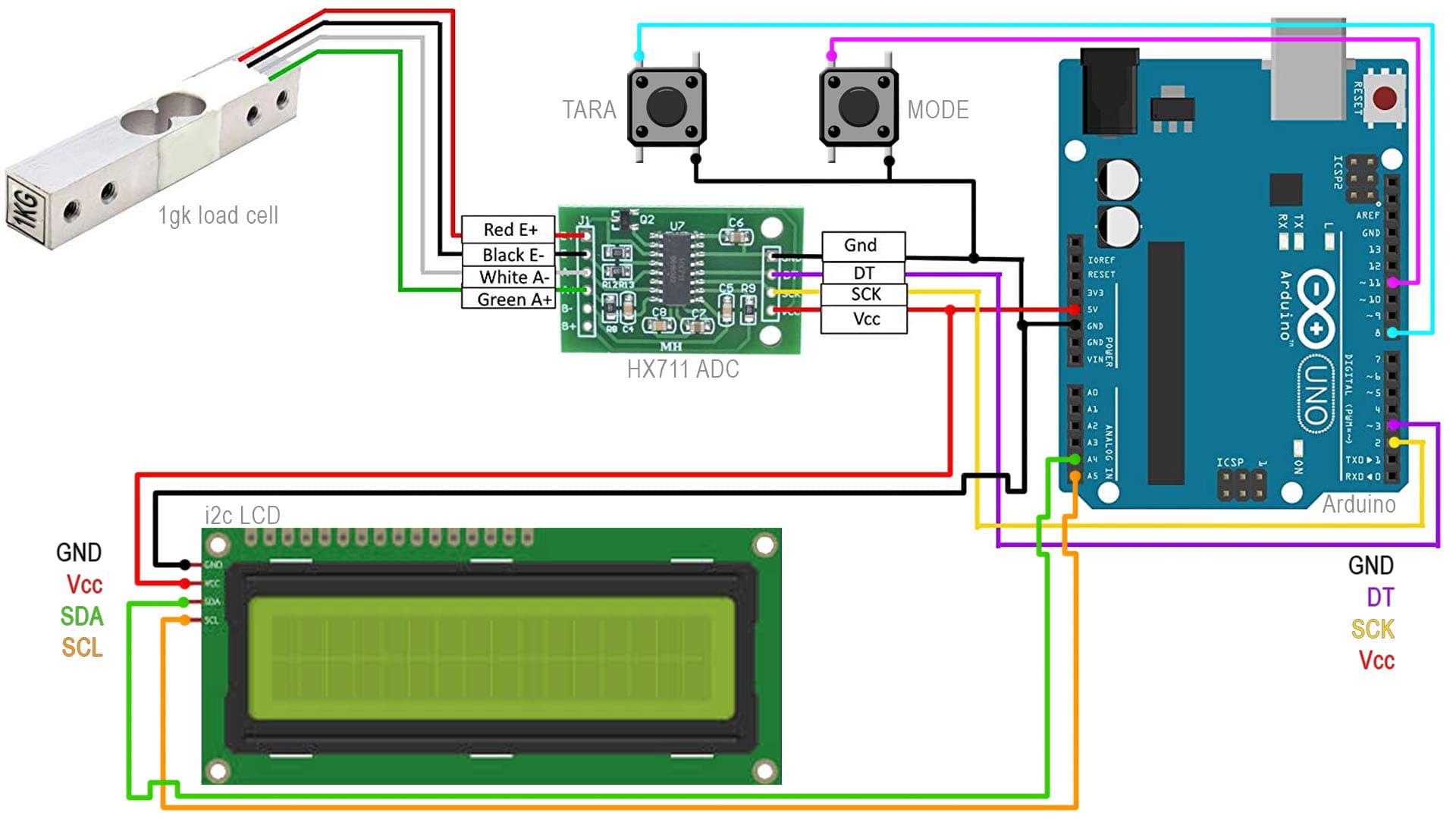
Lab 9: Electronic Scale was the capstone exercise I designed for the SJSU mechatronics course, integrating analog sensing, signal conditioning, and calibration into a single hands-on project. Students built a functional digital scale from discrete components, reinforcing the software-driven hardware integration skills that are essential for robotics and automation.
The lab centered on a strain-gauge load cell amplified by an HX711 24-bit ADC module. Students wired the Wheatstone bridge circuit, configured the HX711 gain and sample rate, and wrote Arduino code to read raw counts and convert them to grams. A multi-point calibration procedure — using known reference masses — taught students about linear regression, offset correction, and the importance of repeatability in measurement systems.
Beyond the core measurement task, students implemented features such as tare functionality, running-average filtering to smooth noisy readings, and an LCD or serial-monitor display with unit conversion (grams, ounces, kilograms). The lab emphasized soldering and PCB-level debugging — students had to assemble and troubleshoot their amplifier circuits before writing any code, reinforcing the hands-on skills needed for real-world electronics prototyping.