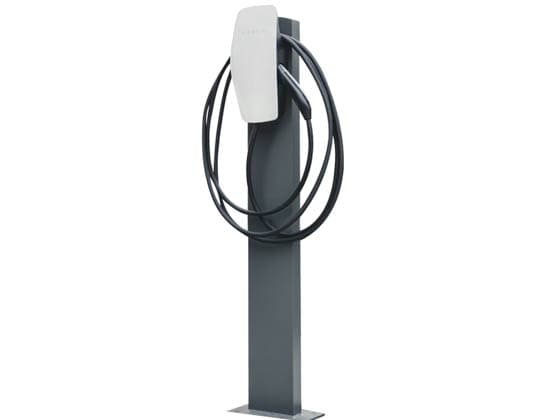
Tesla
52 kW DC/DC Converter
Designed and developed the mechanical components for a 52 kW DC/DC Converter Testing System — instrumental in validating the performance and reliability of Tesla Superchargers before field deployment.
At a critical juncture of Tesla's ambitious expansion into fast-charging infrastructure, I was entrusted with the responsibility of designing and developing the mechanical components for a 52 kW DC/DC Converter Testing System. This system is instrumental in ensuring the performance and reliability of Tesla Superchargers before they are deployed in the field. My role often served as a bridge between mechanical designs, electrical requirements, and manufacturing capabilities.
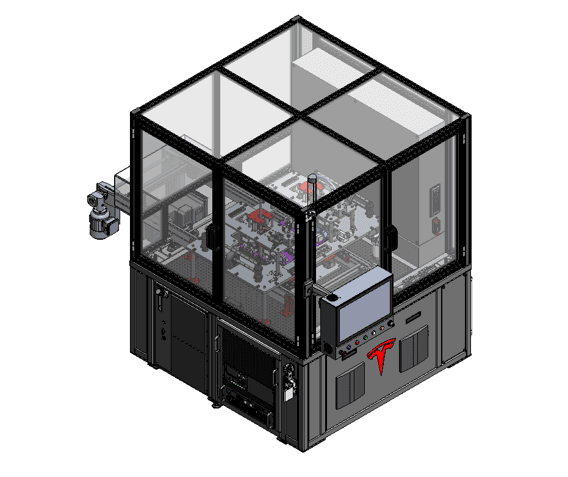
I conceptualized and drafted the mechanical design for the electrical panel of the converter, ensuring optimal component arrangement for effective heat dissipation, easy maintenance access, and streamlined electrical routing. Every layout decision balanced thermal management against serviceability — high-power components needed adequate spacing and airflow while keeping cable runs short and organized.
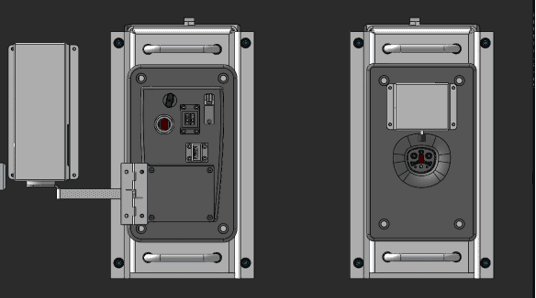
Given the robustness and precision required for such a high-power application, I designed various sheet metal parts from scratch. My design process prioritized both functionality — ensuring parts could withstand electrical stresses and thermal cycles over thousands of charge/discharge operations — and manufacturability, ensuring ease of fabrication and assembly on the production floor.
After initial designs were drafted, I closely collaborated with fabrication teams to prototype these components. This iterative process allowed me to refine designs based on real-world feedback, ensuring the final components were both cost-effective and performance-optimized. I also fostered close collaborations with suppliers, ensuring timely procurement without compromising on quality — a critical factor given Tesla's aggressive deployment timelines.
The end result was a robust, efficient, and scalable testing system that now plays a crucial role in vetting and validating Tesla Superchargers before they reach the field. The project demanded close coordination with electrical engineers, firmware teams, and manufacturing specialists, and reinforced my ability to deliver cross-disciplinary mechanical engineering under high-stakes production deadlines.